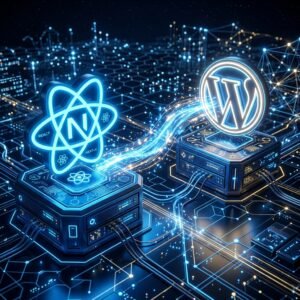
In the modern web era, user experience and speed are the absolute pillars of digital marketing success. Consequently, traditional monolithic websites often struggle to deliver instant load times under heavy traffic loads. To resolve this, developers are turning to decoupled frontend frameworks. By implementing a professional Next.js WordPress Integration, you get the robust CMS features of WordPress and the extreme speed of Next.js.
What is Headless WordPress?
In a headless setup, WordPress acts solely as a content management system, running on the backend. Meanwhile, Next.js manages the frontend, rendering pages as static files or dynamic server-side layouts. Consequently, the frontend and backend are completely decoupled. This separation of concerns increases page loading speeds and gives developers complete design freedom.
Moreover, decoupled setups improve website security. Because the WordPress dashboard is hidden from the public frontend, hackers cannot target login pages. You can view our headless project designs in our headless web design showcase. Consequently, you will see how modern frontend setups create immersive, fast digital designs.
Core Benefits of Next.js WordPress Integration
First, achieve unmatched web performance. Next.js pre-renders pages during the build process, generating lightweight static HTML files. When a user clicks a link, the page loads instantly without executing heavy database queries. Consequently, your bounce rates drop, keeping visitors engaged with your products.
Second, enjoy superior search engine visibility. Next.js offers built-in SEO tools that allow you to generate custom meta tags and sitemaps easily. For details on server rendering, check the Official React Developer documentation. Decoupled platforms ensure crawlers read your content without executing heavy Javascript scripts.
Connecting Frontend and Backend via APIs
Additionally, developers connect Next.js to WordPress using the REST API or WPGraphQL. When writers publish an article in WordPress, Next.js rebuilds the page automatically using Incremental Static Regeneration (ISR). To explore our custom frontend architectures, check our headless development services. This keeps your content fresh and fast.
Furthermore, developers should optimize image components in Next.js. The framework automatically compresses images and serves them in WebP format. By reducing image sizes, you prevent layout shifts and speed up loading times. As a result, your site provides a premium browsing experience, leading to a steady increase in sales.
Unlocking the Future of Web Development
In conclusion, a decoupled headless setup is the ultimate solution for brands requiring speed, scale, and high-end security. Our engineering team specializes in headless integrations. If you are ready to upgrade your brand with a custom headless build, please contact our headless development team today to schedule a detailed tech consultation!